In Sandvika, near Oslo, a business school once had a seven-metre paper clip in front of it (it has since moved to the school’s Oslo campus), a monument to a Norwegian inventor. It shows the wrong paper clip.
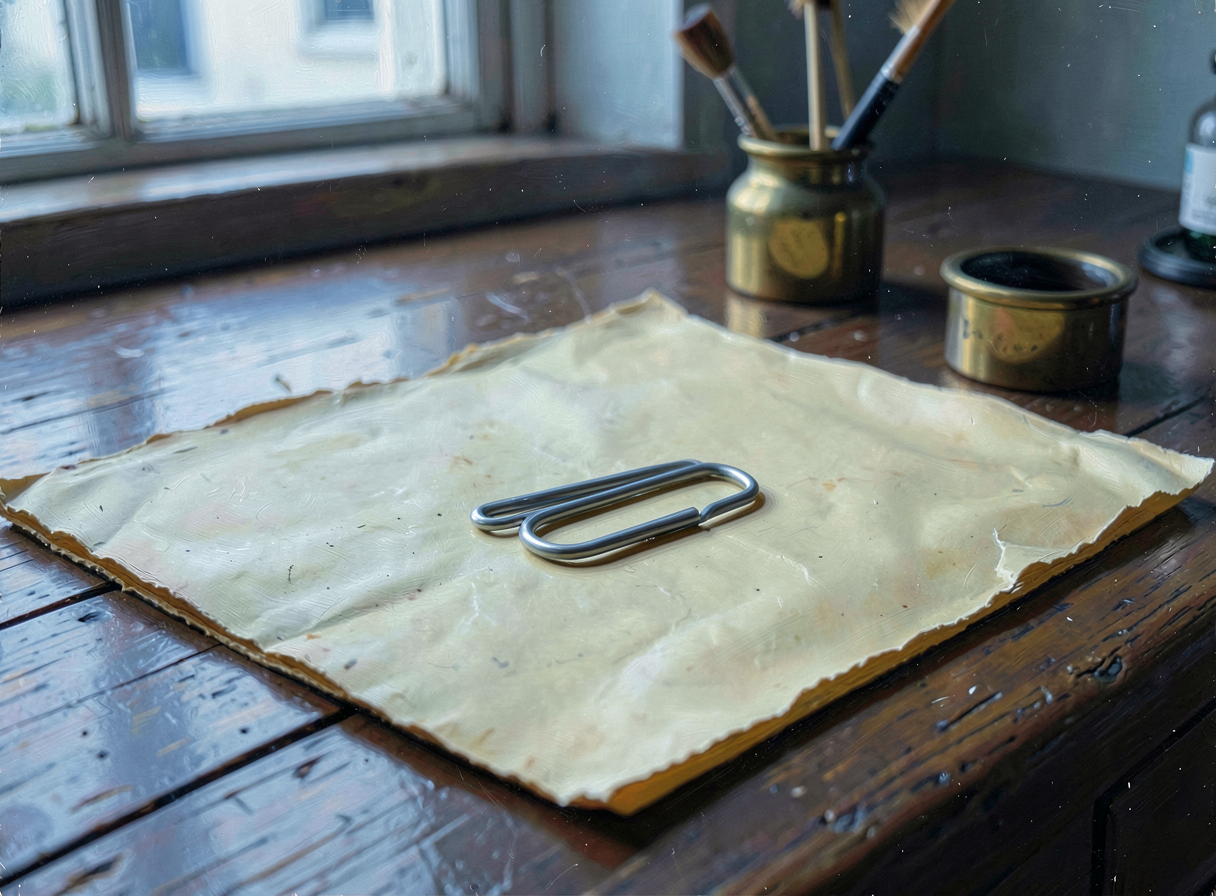
Nobody knows who invented the ordinary paper clip, the one with two and a half loops of steel wire that the trade calls a “Gem”. It was never patented. The historian of engineering Henry Petroski thought it was probably being made in Britain as early as the 1870s. The first certain picture of it is an American advertisement from 1893. In 1899 William Middlebrook, of Waterbury, Connecticut, patented a machine for making wire paper clips, and the clip in his drawing is already a Gem.
That same year a Norwegian clerk, Johan Vaaler, applied for a German patent for a paper clip of his own. It was granted in 1901, and so was an American one. His design lacked the last inner loop. It held paper less well and was never manufactured.
So how did Vaaler become the father of the paper clip? In the 1920s a senior engineer at the Norwegian patent office, Halvard Foss, came across his application in the German archives. From there the story found its way, over the decades, into Norwegian encyclopedias. It also became tied to a real and brave gesture. During the German occupation many Norwegians wore a paper clip on their lapel, a quiet sign of standing together, and the Nazi party’s militia punished people for it. After the war the two stories merged. The giant clip given in 1989, and a postage stamp in 1999, both honour Vaaler, and both show a Gem.
What we don’t know. Where the Gem was born, Britain or America. Whether a “Gem Manufacturing Company” in England really made it first. Even the origin of the lapel clip has more than one version. What is not in doubt is that the clip on the lapel meant something real, whoever bent the wire.
Sources: Store norske leksikon, “binders” (Magne Brekke Rabben and Lars Roede); John Lienhard, The Engines of Our Ingenuity No. 769, University of Houston; US Patent 636,272, W. D. Middlebrook, 1899 (Google Patents); Wikipedia, Paper clip; Henry Petroski, The Evolution of Useful Things (1992), as cited.