“the sun setting in the evening hides itself as though behind a small hill in such a way that there was no darkness” — Dicuil, c. 825
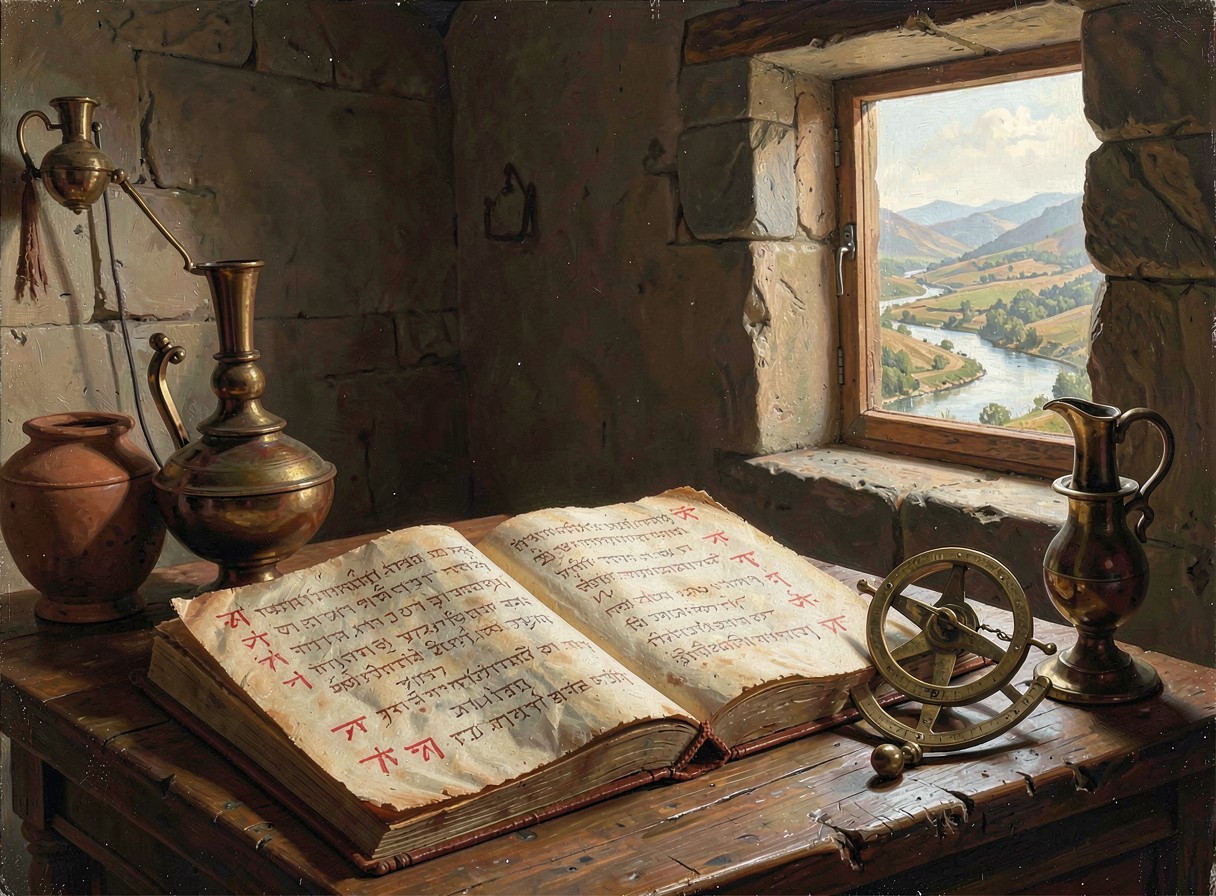
Dicuil was an Irish monk working at the Carolingian court. Around 825 he finished the Liber de mensura orbis terrae, a book of geography built on Pliny, Solinus and Isidore of Seville, but with something the ancients did not have: the words of witnesses of his own time.
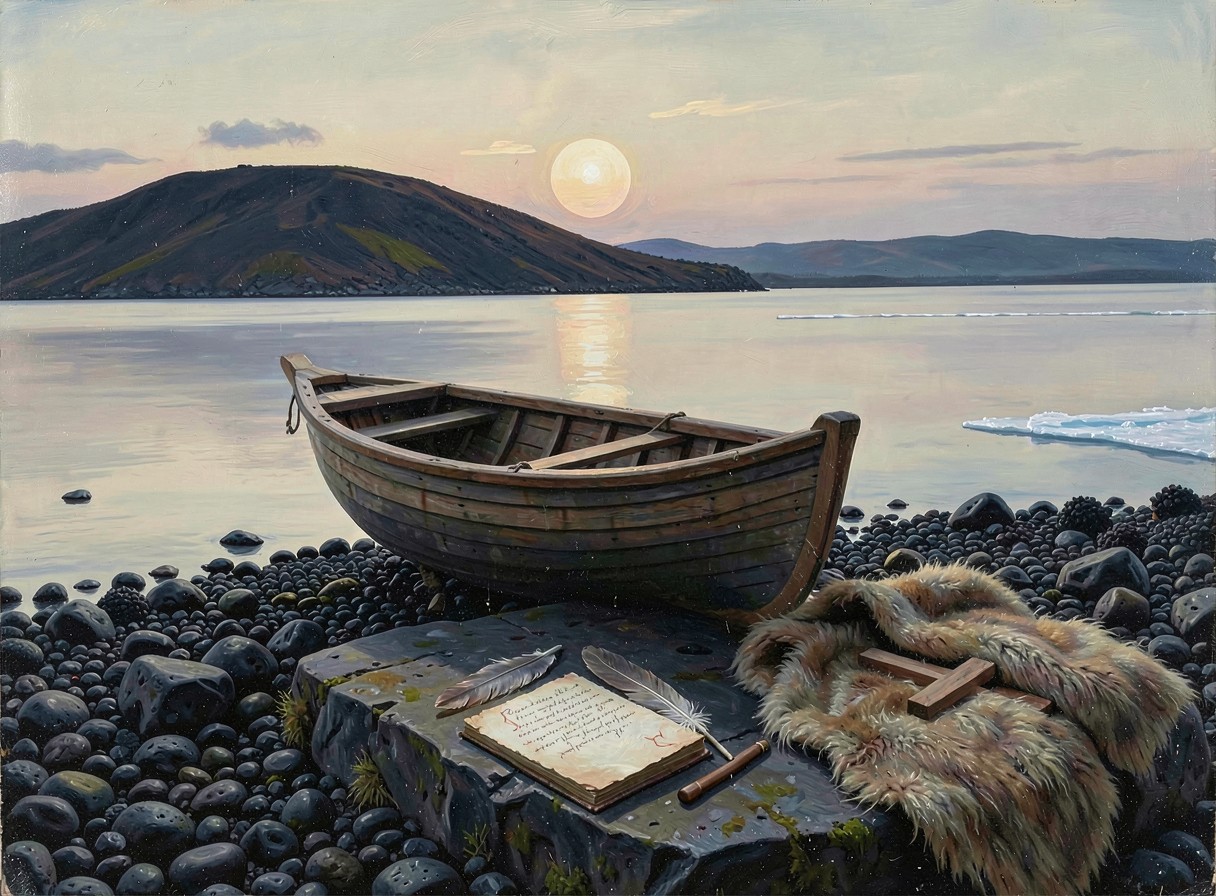
In the seventh chapter he tells of clerics who stayed on the island of Thule from the first of February to the first of August. Around the summer solstice, they told him, the sun hid only briefly, “as though behind a small hill”, and it did not grow dark: one could do any kind of work, even pick the lice from one’s shirt. So Dicuil corrected the ancient authors: the sea around Thule was not solid; they found ice only after a day’s sailing to the north.
The book has reached us through a few manuscripts: one in Paris from the late ninth century, one in Dresden destroyed in the bombing, one from Speyer that is lost, and a copy of 1436 in Oxford. The first printed edition appeared in Paris in 1807.
A word of caution. That Thule is Iceland is the scholars’ interpretation, very likely but not certain. How widely the book was read in the Middle Ages none of the sources we read says: that it circulated little is our own inference from the small number of manuscripts. The date of 795 for the clerics’ stay comes from Britannica, which we could not read in full.
This story is one of the rooms of the Museum of Missed Chances, where inventions and ideas that came too early hang as paintings.
Sources: Dicuil, Liber de mensura orbis terrae, text and translation by J. J. Tierney (1967), CELT, University College Cork; Catholic Encyclopedia (1908), Dicuil; Wikipedia, Dicuil; Encyclopaedia Britannica, Dicuil (summary only).