


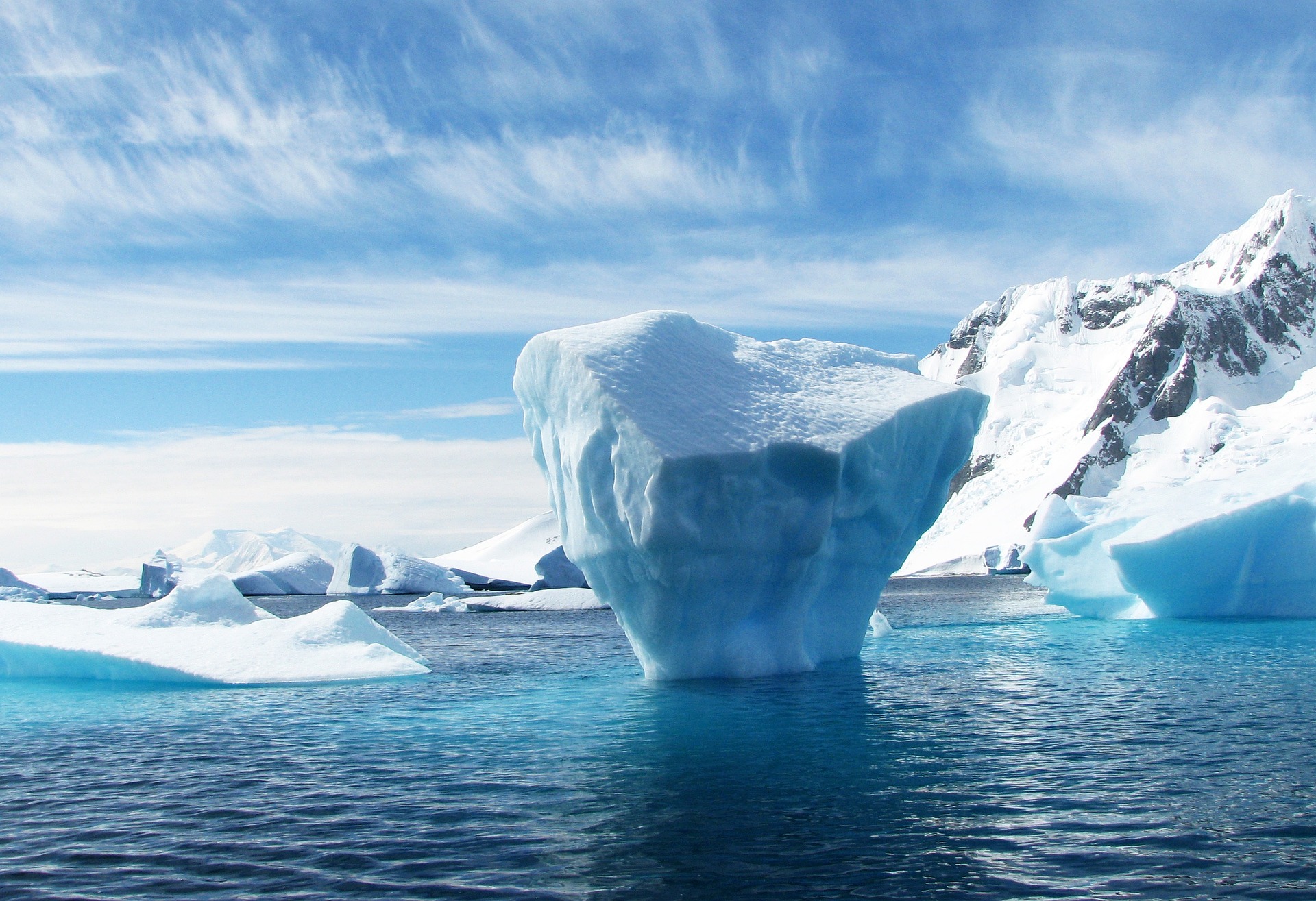
The hidden boundaries of the lands beneath the South Pole are a subject of great interest to explorers, scientists and geography enthusiasts. These lands, covered by a thick layer of ice, are still relatively unexplored and little known.
Despite its extreme climate, Antarctica has been the subject of numerous explorations and scientific research over the past centuries. Explorers have discovered only some of Antarctica’s most interesting geographical features, including subglacial mountains and volcanoes. However, there is still much to discover beneath the surface of the ice.
One of the main discoveries of Antarctica’s explorers was the presence of a vast system of underground caves created by water flowing beneath the ice. These caves were formed by underground rivers and lakes flowing through cracks in the ice. Many of these cave systems are still unexplored and could hide some of Antarctica’s most valuable resources, such as drinking water and minerals.
Another geographical feature of Antarctica that has recently been discovered is the presence of ice-covered subglacial mountains. These mountains were discovered using sophisticated detection technologies such as gamma-ray radar and satellite imagery. They can exceed 3000m in height and represent a further challenge for exploration and scientific research in this remote region.
Finally, Antarctica is also home to numerous subglacial volcanoes that have been detected only in recent years. These volcanoes were discovered using seismic detection and geological imaging techniques.
The thickness of Antarctica’s ice crust varies considerably depending on geographical location. In general, the ice crust is thicker inland and thinner along the coast.
In West and East Antarctica, the ice crust can reach up to 4,776 meters thick. In addition, there are some areas of Antarctica, called Domes, where the ice crust is particularly thick, exceeding 4,800 meters. The average thickness is 2,160 meters. Moreover, the Antarctic ice sheet is the largest mass of ice on Earth.
However, there are also areas along the coast where the ice crust is much thinner, with a thickness that can be less than 100 meters. These areas are often subject to collapse and to rapid melting of the ice caused by the action of the sea.
In general, it is important to note that the thickness of Antarctica’s ice crust is constantly changing because of climate change and the action of ocean currents and winds. Some areas are shrinking rapidly, while in other areas new ice sheets are forming.
Studying Antarctica’s ice crust and how it changes over time is important for understanding the effect climate change has on the global climate balance and for predicting any future impacts on life on Earth.
It seems that our planet’s ice may hide other surprises. For example, a 2020 study of ice samples taken from a Tibetan glacier described ancient viruses found in a melting glacier. When the researchers analyzed the 15,000-year-old ice, they found genetic codes for 33 viruses. Four of those viruses had been previously identified and belonged to families of viruses that usually infect bacteria and plants. But at least 28 of them were new. About half of them appeared to have survived at the time they were frozen.