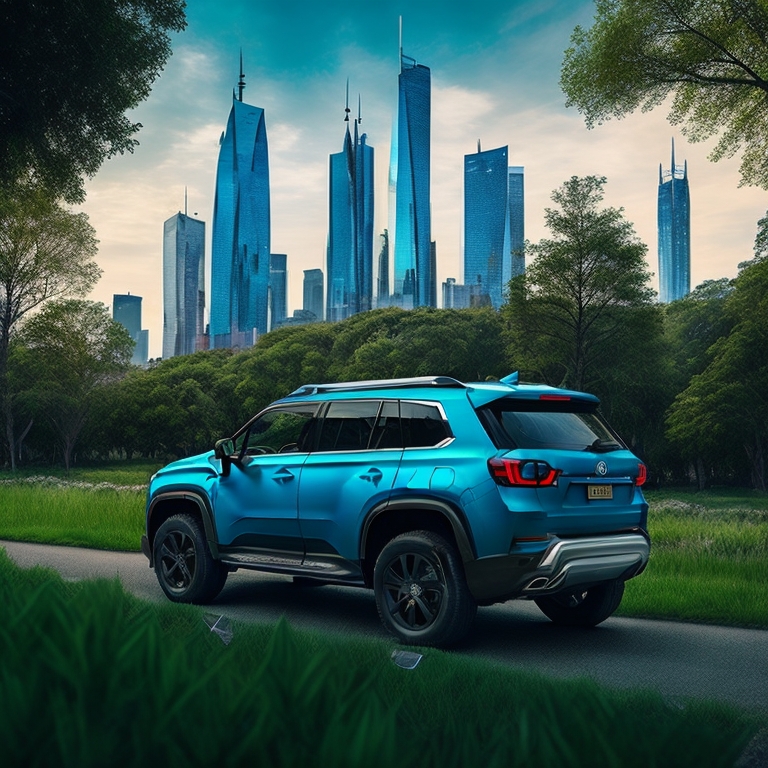
Welcome to the future of mobility, where cars are not just means of transport but true travel companions. Imagine a world in which cars do not need a driver, but are equipped with technology so advanced that they can navigate city streets and highways on their own. This is not a dream, but the reality we are living thanks to the rise of autonomous vehicles.
Autonomous vehicles, often called self-driving cars, are revolutionizing the concept of transportation. These technological marvels, which seem to have come straight out of a science fiction film, use a combination of sensors, cameras, GPS and computer algorithms to move safely and efficiently, avoiding obstacles and obeying the rules of the road.
Automotive giants such as Tesla, Ford and General Motors, and technology heavyweights such as Google and Apple, are investing huge resources in this revolution on four wheels. This is not a whim, but a response to the needs of an ever-changing world.
One of the most significant advantages of autonomous vehicles is improved road safety. These vehicles are designed to eliminate human error, one of the main causes of road accidents. According to the National Highway Traffic Safety Administration, 94% of accidents are caused by human error. With the introduction of autonomous vehicles, we could see a drastic reduction in accidents, thus saving countless human lives.
But that’s not all. Autonomous vehicles represent a new frontier of mobility for those who cannot drive themselves, such as people with disabilities, the elderly and those who cannot afford a car or do not have a driver’s license. This technology has the potential to offer these people greater independence and accessibility, radically transforming their quality of life.
In addition, autonomous vehicles could have a significant impact on the environment. These cars are expected to be more fuel-efficient than traditional vehicles, since they will be programmed to drive in a way that reduces fuel consumption. This could lead to a reduction in emissions and air pollution, thus contributing to the fight against climate change.
However, like every revolution, the autonomous vehicle revolution also brings challenges. Concerns include the safety and reliability of this technology, the risk of hacking, software malfunctions and sensor failures. In addition, there is the question of liability in the event of accidents involving
an autonomous vehicle. Who will be held responsible? The vehicle manufacturer? The software? These are questions that require clear answers and precise regulations.
To address these challenges, the National Highway Traffic Safety Administration has issued guidelines for autonomous vehicles, which include standards for vehicle performance, data sharing and cybersecurity. Other states and countries around the world are working to create their own regulations on autonomous vehicles, in an attempt to guarantee the safety and reliability of this revolutionary technology.
As autonomous vehicles become more common, they are likely to have a significant impact on the way we live and work. They could change the way we get around, reduce the need for parking and even create new industries. They could transform cities, making streets safer and less congested, and they could even change the way we think about time and space.
Despite the challenges to be overcome, the future of autonomous vehicles looks bright. This is a revolution on wheels, a revolution that promises to make our roads safer, our cities more livable and our lives more comfortable. So fasten your seatbelts and get ready for a journey into the future of mobility. The future is here, and it is autonomous.