This article is a kind contribution to the blog by Alessandro Burgognoni.
I have always been amazed by the power of words, their ability to stir minds and arouse feelings that go beyond the sense of the everyday, for better or for worse, just as I have been amazed to consider the power of the thought expressed with those words, which has contributed to the evolution of the world throughout history.
Trying to understand language takes us beyond wonder. That sequence of letters and corresponding sounds that for us carries meaning and knowledge, that interpretive capacity of our brain and our mind to give logic, rationality and meaning to those words, has always made me ask how this happens.
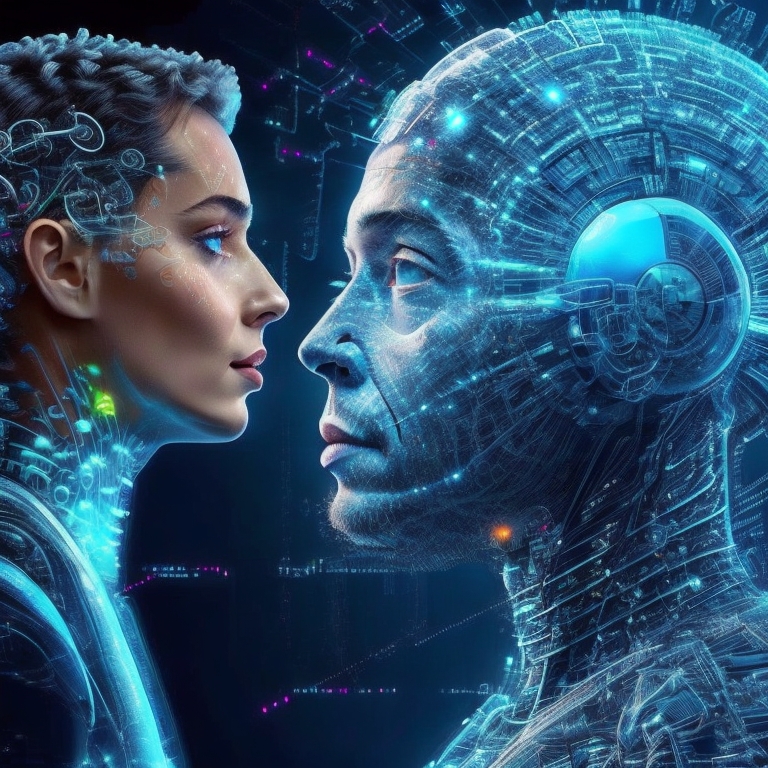
Linguistics has made giant strides in defining and structuring the forms of language. And yet its applications in artificial intelligence show us that, at present, the most advanced skills of “intelligent” systems are limited to the syntactic-lexical aspect of the sentence, without any “awareness” of, or relationship with, the reality that the sentence represents, with a semantic link dictated by a statistical/probabilistic process based on access to an extraordinarily large mass of data.
A recent example:
The amazement at “LaMDA” (Language Model for Dialog Applications), Google’s chatbot system
“LaMDA is a chatbot system based on some of the most advanced large language models in the world, AI systems able to conjure up coherent sentences after ingesting trillions of words from Wikipedia, Reddit and other sources of knowledge. (Source Ari Moutafis – Is Google’s LaMDA AI Truly Sentient?)”. Its apparent gifts of “consciousness” derive from the fact that if we receive a meaningful answer to a question, we deduce that there is an intelligence/consciousness behind it. In reality, as the philosopher Luciano Floridi argues, we have reached a point in technology where the capacity to act, “agency”, exists without any intelligence behind it, in short “agere sine intelligere”. Today our ability to create sophisticated and complex algorithmic processes allows us to obtain “intelligent” behavior from our systems without the “intelligere” really being there. In short, in the most extreme Floridian summary: a divorce between intelligence and the capacity to act.
The AI ethicist Margaret Mitchell sums up what LaMDA is: “a computer program, not a person.” – and indeed no program, however sophisticated, is a person.
A sentence makes sense because whoever reads it or hears it has a cultural substrate that allows them to place it within a set of concepts and knowledge that characterize and identify its signifier and its signified – (The signifier, that is the written or spoken word, the element perceptible with the senses; the signified, that is the image present in the mind, the sense, the concept.).
A consciousness is needed to make a concept fit the reality we perceive, deliberately leaving aside the concept of reality – if you want to explore it further, the book “In Search of Reality” by Bernard D’ Espagnat is illuminating – the concept of an objective reality accessible to research is too complex to be dealt with in this piece; we will settle for a “simple” concept of perception of the world in the broad sense.
Because of that perception of reality, the signifier and the signified are in some way linked to each other by custom and by the history of the language:
“The bond that unites the signifier to the signified is arbitrary: it has a historical motivation, that is, it is found in the history of the language. For the ordinary speaker, who knows nothing of the history of their own language, this bond is a convention accepted by the whole linguistic community to which they belong.” (Source: Sergio de Tomi – “Significante e Significato”)
Language characterizes the human dimension and sets it apart from the other living species, which, although they have very sophisticated means of communication, both plants and animals, are not able – at least as far as we know today – to conceptualize and articulate thought as we commonly do.
“The challenge of creating humanlike intelligence in machines remains greatly underestimated. Today’s AI systems sorely lack the essence of human intelligence: understanding the situations we experience, being able to grasp their meaning. The mathematician and philosopher Gian-Carlo Rota famously asked, “I wonder whether or when AI will ever crash the barrier of meaning.” To me, this is still the most important question.” from the Times – Melanie Mitchell – Artificial Intelligence Hits the Barrier of Meaning.
Words animate our days and above all our desires, and they drive our actions because we attribute meaning to them, just as we attribute meaning to a symbol; but machines are clearly unable to give “meaning” to the symbols they manipulate: they are powerful manipulators incapable of awareness.
The power and effectiveness of the words we use to communicate must find a response in the dimension of all and of each, so much so that the same words, within the language of one’s own group, arouse attention or indifference depending on each person’s world and on the “meanings” each person carries within. Great dialecticians and orators know how to strike the chords of shared “meanings” to bring their listeners to the same level of sensitivity on the subject being presented, even though the nuances of each individual’s level of knowledge will emerge in their personal “understanding”.
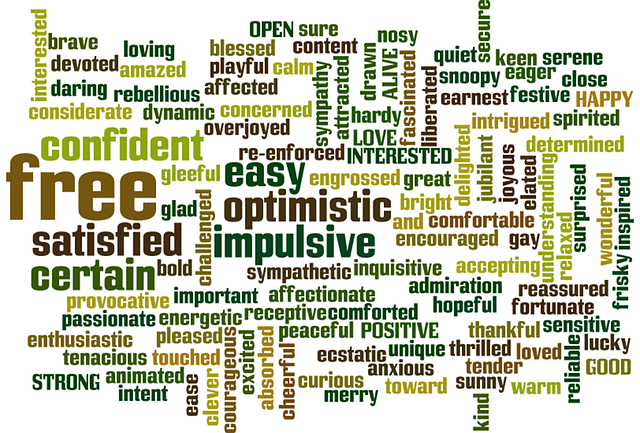
Words that are sometimes empty, only to fill time; competent and targeted words to guide a choice or the search for a solution; words for playing; words for living, for loving and for helping; words that are sometimes harsh, to offend and to wound: our existence is immersed in words and in the search for meaning that passes from words to the meaning of existence.
There is still no exhaustive and established “theory of meaning”; philosophers and scholars have been racking their brains over it for years. And yet, through words and the interaction they make possible, we have moved forward in our lives every day without mastering what a “meaning” is, because that ability to handle it belongs to us as rational, thinking humans. The use of AI to create semiotic systems could make it possible to test the validity of possible models of natural-language semantics and, step by step, lead us towards a better understanding of meaning and of the brain mechanisms and structures that enable our ability to use it.
Meanwhile, the wonder of language remains. Let us make good use of this wonder, for ourselves and for others. The world needs words suited to the times, and these are times when words and meanings are often ambiguous and misleading. Let us start with ourselves, with our own words: may they be the fruit of awareness, may they carry content and may they inspire positivity.