

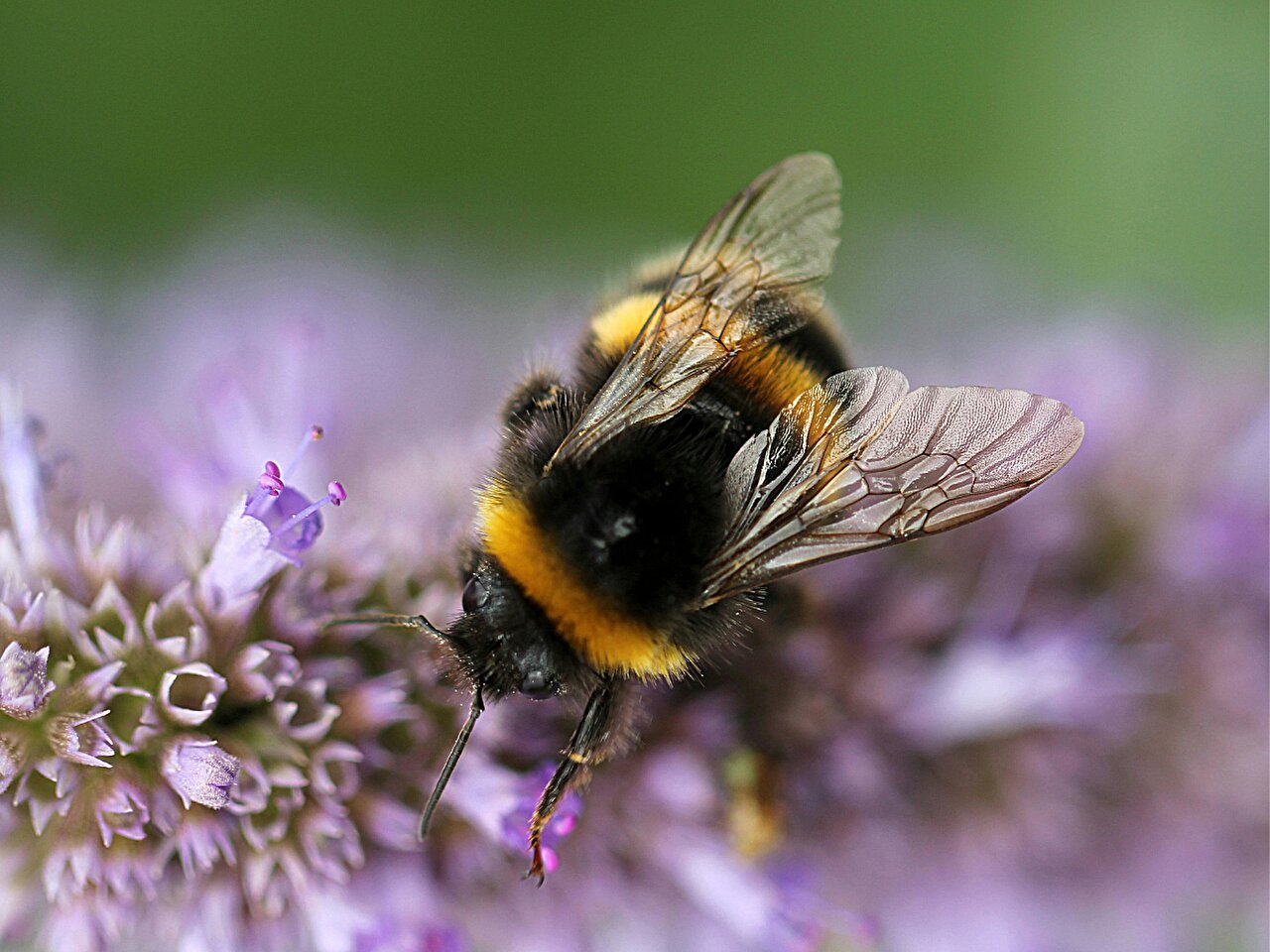
Queens of bumble bees native to Pennsylvania are particularly vulnerable to external pressures, such as harsh winters, according to researchers.
The effects of pesticide exposure on pollinator health may be more complex than initially thought. A team of researchers from Penn State’s College of Agricultural Sciences recently published a study in the journal Biology Letters, highlighting new dynamics in this area.
The impact of imidacloprid on bumble bees
In their research, the scientists analyzed the effects of imidacloprid, a commonly used insecticide, on bumble bees. The results showed that exposure to the pesticide is associated with reduced lifespan and reproductive capacity. However, low doses led to an unexpected effect: greater survival of new queens during diapause.
This phenomenon, known as hormesis—in which small doses of a toxic substance can have beneficial effects on organisms—is still poorly understood in pollinators. Moreover, short-term advantages often come with long-term costs, explained Etya Amsalem, associate professor of entomology at Penn State and lead author of the study.
“If hormesis is not recognized, one could wrongly conclude that some pesticides are beneficial to bees,” Amsalem said. “That is a dangerous mistake, given the extensive documentation of the negative effects of imidacloprid and of the consequences of hormetic responses, in which temporary benefits compromise long-term health.”
Amsalem compared hormesis to the effects of caffeine: in small amounts it can be useful, but at high doses it becomes toxic.
“Even at low doses, caffeine can have side effects, such as disrupting sleep,” she explained. “In the same way, researchers and policymakers need to consider hormesis when assessing the impact of pesticides on pollinators.”
The critical role of diapause
Bumble bee queens must go through diapause, a dormant phase that allows them to survive extreme environmental conditions and then found new colonies in spring. This phase is crucial, since more than 75% of a queen’s life can be spent in diapause. During this period, she faces harsh temperatures, possible infections and food shortages. If she does not make it through this phase, she cannot start a new colony, resulting in the loss of hundreds of potential pollinators.
“Diapause is still understudied,” Amsalem stressed. “And yet most pollinators go through it. However, pesticide risk assessments focus almost exclusively on the bees’ active seasons, ignoring a fundamental part of their life cycle.”
During the active seasons, pesticides are known to have harmful effects on pollinators. Many of them dissolve in water, from which plants can absorb them and carry them into pollen and nectar. As a result, bees and other pollinators can ingest pesticide residues, with effects ranging from immediate death to reduced longevity and fertility.
The experiment: effects of imidacloprid on diapause
To assess the impact of imidacloprid, one of the most widely used neonicotinoids, both during the active season and in diapause, the researchers fed bumble bees a sugar-water solution containing the pesticide. They then monitored the lifespan of males, workers and queens, also measuring the reproductive capacity of the females.
“The results were clear: higher concentrations led to reduced lifespan and lower offspring production, a typical response to neonicotinoids,” Amsalem stated. She also pointed out that, while these pesticides are banned in Europe, they still account for about 25% of the global pesticide market.
But the most surprising finding emerged from the second experiment.
“We gave queens sublethal doses of imidacloprid, placed them in diapause in cold rooms and monitored their survival weekly,” Amsalem explained. “To our surprise, we found that exposure to low doses of imidacloprid actually improved queen survival.”
The queens exposed to the pesticide proved unexpectedly more resistant to harsh winter conditions.
Implications for conservation and pesticide risk
In light of these results, Amsalem recommended integrating these findings into risk assessments and bumble bee conservation strategies. She also highlighted the importance of further studies on hormetic responses, to better understand the causes of this phenomenon.
“Understanding the mechanism behind hormesis could provide a broader view of insects’ responses to pesticides,” she said. “But above all, it is essential to conduct thorough scientific research that offers a complete understanding of how environmental stresses affect pollinators. Only then can we ensure more effective and better-informed conservation strategies.”
Conclusions
This study underscores the importance of examining the entire life cycle of pollinators in pesticide-related risk assessments. Although hormesis may offer temporary benefits, its long-term effects remain uncertain and potentially harmful. A thorough understanding of these mechanisms will be crucial for protecting pollinators and sustaining biodiversity.
Co-authors of the study: Nathan Derstine (postdoctoral researcher) and Cameron Murray (undergraduate research assistant), both at Penn State.
📖 Study source:
Etya Amsalem et al., Hormetic response to pesticides in diapausing bees, Biology Letters (2025).
🔗 DOI: 10.1098/rsbl.2024.0612
📌 Reference: Bumble bee queens illustrate the complex effects of pesticide exposure on pollinator health (Phys.org, February 25, 2025).
Co-authors of the paper are Nathan Derstine, postdoctoral researcher, and Cameron Murray, undergraduate research assistant, both at Penn State.
More information: Etya Amsalem et al., Hormetic response to pesticides in diapausing bees, Biology Letters (2025). DOI: 10.1098/rsbl.2024.0612
Citation: Bumble bee queens illustrate the complex effects of pesticide exposure on pollinator health (February 25, 2025), retrieved March 3, 2025 from Phys.org.
Provided by
Pennsylvania State University
Credit: Sandy Millar/Unsplash