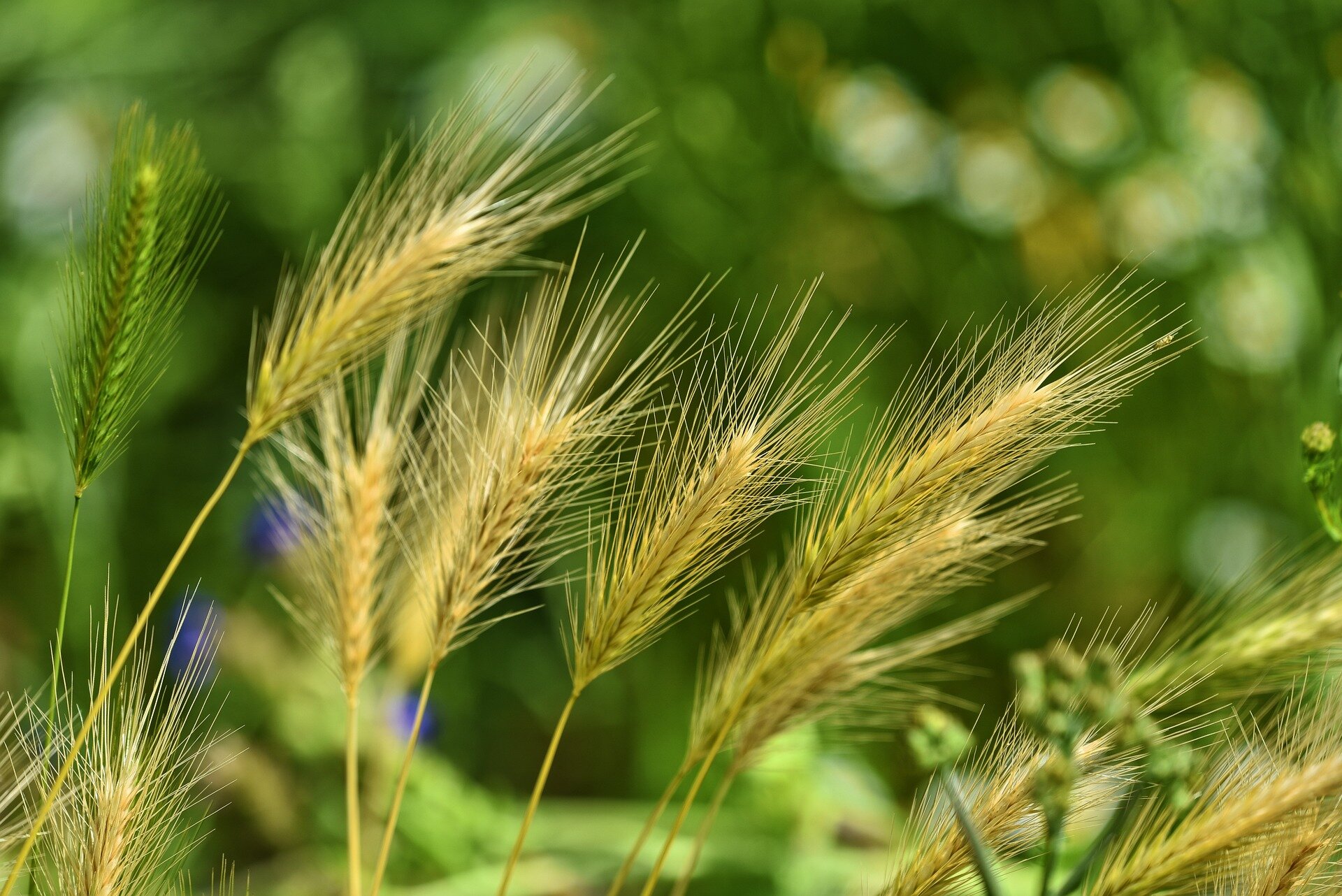
The database is the culmination of 30 years of collaborative research by archaeologists and ecologists working at the Universities of Sheffield and Oxford. It catalogs nearly 1,000 species of weeds that grow in traditional farming regimes in Europe, western Asia and North Africa. The work has been published in Vegetation History and Archaeobotany.
The open-access resource, created and published by academics carrying the research project forward through the University of Oxford Research Archiveoffers researchers around the world the opportunity to compare archaeobotanical data with “traditional” farming systems.
The database catalogs the functional traits of weeds growing among arable cereals and pulses for all 928 weed species. The aim of the project was to be able to compare past and present farming systems through the weeds that grow alongside arable crops.
Plant ecologist John Hodgson, who worked in what is now the School of Biosciences at the University of Sheffield, has been involved in the research since the 1990s. He said: “The data offer archaeologists and plant ecologists a way to understand the past and to predict the future together.
“In modern farming environments, where crops are micromanaged and anything unwanted is removed, it can be difficult to monitor long-term changes in environments and plant species. So by investigating historical weed populations, rather than the crops, the data offer researchers a unique way to see what has been lost and gained over the centuries.
“Analyzing the data allows us to see which types of plants have the capacity to adapt or might be vulnerable to changes in conditions in their habitats. The reliable data from this years-long research offer the potential to understand the resilience of food systems in a period of climate change, drought and land degradation, and to explore a narrative for the issues the world faces today in terms of global food production.”
The data models contained in the new package seek to understand how low-input (extensive) farming and high-input (intensive) arable farming compare, offering academics a free resource for understanding the nature of crop cultivation at field research sites, including how much workers were investing in farming practices at any given time and what this can tell us about the sites and their inhabitants.
Glynis Jones, Emeritus Professor of Archaeology at the University of Sheffield, commented that the data have uncovered new insights into the history of farming and have changed our understanding of how agriculture developed globally. She said: “The aim of the project was to use relatively simple functional attributes of different plant species, which can be measured more quickly than through expensive and time-consuming experiments, to give us some completely new information about historical sites.
“We tend to assume that farming started out non-intensive and became progressively more intensive over the centuries. However, we found Neolithic and Bronze Age sites that challenge this belief, small plots of land that were intensively cultivated, using practices such as fertilizing, watering and weeding of crops like wheat or barley; places where a lot of human effort went into growing crops.
“We also found that Iron Age and Roman-period sites that covered larger areas were cultivated less intensively, so more crops could be grown, but they would not have been cultivated as intensively as before since they covered larger areas. Modern farming, by contrast, is characterized by including both intensive and extensive farming practices.
“Our research has revealed to us the trends in arable farming over time and how farming practices have varied in different environments.”
Those involved in the database say it constitutes a key research resource for academics working in ecology and archaeobotany. It is the culmination of 30 years of research by current and former academics at the University of Sheffield and those now at the University of Oxford, including Professor of Environmental Archaeology Mike Charles and Professor of European Archaeology Amy Bogaard, who led the work to create the new R package “WeedEco” which is open access for everyone.
Elizabeth Stroud, of the University of Oxford, who led the development of the new WeedEco R package, said: “For the first time, the new publication makes these datasets and models accessible to anyone interested in the comparative study of past and present arable farming. This means that anyone involved in developer-funded or academic archaeology, or in plant science and ecology, can engage directly with this research and carry out their own analyses.
“The models we are releasing in the R package have featured prominently in recent farming-related research projects at the University of Oxford’s School of Archaeology, such as FeedSax and AgricUrb. This work has shed new light on how a range of different societies over time produced their staple crops.”
Amy Bogaard, of the University of Oxford and senior author of the latest study, observed: “The new R package and the newly published dataset of functional traits for nearly 1,000 weed species are a testament to the dedication of everyone involved, and above all to the vision and commitment of colleagues at the University of Sheffield, where the functional ecological approach and its link with archaeobotany originated. This is truly a joint celebration with colleagues in Sheffield and the School of Archaeology in Oxford.”