


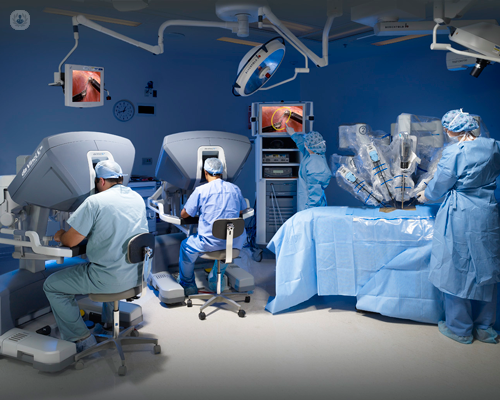
Robotic surgery is a growing field that is opening new frontiers in medicine. Innovative technologies in this field allow surgeons to perform complex operations with precision and with minimal risk of complications. In this article we will look at what robotic surgery is, how it works, and the advantages and challenges associated with it.
What is Robotic Surgery?
Robotic surgery is a rapidly evolving field. It is a surgical technique that uses a robot to help the surgeon perform an operation. Robots are able to perform precise, repeated movements with great precision, far more accurate than what can be achieved by a surgeon working by hand.
How Does It Work?
Robotic surgery works thanks to a series of advanced technologies such as telerobotics and the human-machine interface (HMI). A surgeon controls the robot from a remote workstation equipped with joysticks, a monitor and a keyboard for control. The robot can then perform exactly the movements requested by the surgeon. HMI technology also provides a high-definition 3D view of the operating field, allowing the surgeon to see the surgical site in detail.
Advantages of Robotic Surgery
Robotic surgery offers many advantages in performing complex operations. The first is precision. Robots can perform very precise movements that are much more accurate than those of a surgeon working by hand. In addition, this type of surgery is less invasive, which means that patients need less recovery time and are less likely to suffer complications. Finally, using a robot helps reduce operating times and, consequently, the associated costs.
Challenges of Robotic Surgery
One of the disadvantages of robotic surgery is that robots cannot yet completely replace the surgeon. Surgeons still have to perform some of the most complex tasks, such as repairing damaged tissue or suturing blood vessels. In addition, robots are fairly expensive to buy, which makes it difficult for many hospitals and clinics to adopt this technology.
Robotic surgery offers a number of significant advantages, including greater precision and less invasiveness. However, there are still some challenges to overcome to ensure that this technology is accessible to as many people as possible. But, with further development of the technology and greater awareness of its advantages, robotic surgery may well become an increasingly important part of the medical experience in the future.
Further considerations
Medicine is a constantly evolving science, which constantly seeks to improve its methods and tools to ensure ever more effective and safe care for patients. Among the most recent and promising innovations are those involving surgery and medical robotics. In this article, we will explore these new developments and their potential implications for the future of medicine.
Traditional surgery is often associated with invasive procedures, which can involve risks for patients and long recovery times. However, in recent years new surgical techniques have been developed that minimize these problems. Laparoscopy, for example, uses small incisions and a camera to view the area to be operated on, allowing surgeons to work precisely without having to open the patient’s abdomen. This type of technology has been used successfully in many procedures, from gallbladder removal to hernia repair.
Besides laparoscopy, there are also other surgical innovations that are becoming increasingly popular. One of these is robotic surgery, which uses robots to assist surgeons during procedures. These robots can provide extremely precise visual and motion support, allowing surgeons to work even more precisely and safely. Robotic surgery is used mainly in abdominal, gynecological and urological surgery. The advantages of robotic surgery include shorter recovery times, a reduced risk of infection and greater precision in carrying out procedures.
Robotic surgery represents an important step forward in medicine, offering numerous advantages for both patients and doctors. The use of medical robots makes it possible to simplify the clinical workflow and improve workplace safety, reducing doctors’ exposure to risky situations. In addition, robotic surgery makes it possible to perform highly precise, minimally invasive operations, resulting in shorter recovery times and shorter hospital stays.
There are various medical robotics solutions, including modular robots and autonomous mobile robots, which can be used for surgery in different operating fields, such as urology, gynecology, general surgery and liver surgery. In particular, the Da Vinci Xi surgical robot has been used in many areas of surgery, including liver and colon surgery.
Medical robotics has made great strides in recent years. Medical robots are designed to assist doctors in a range of tasks, from monitoring patients to delivering drugs and preventing infections. In particular, medical robotics has been used successfully in orthopedics, helping surgeons perform hip and knee replacements with greater precision and safety. Medical robots are becoming increasingly sophisticated and are able to carry out a range of operations that were once performed only by human surgeons.
However, as with any medical innovation, there are also some concerns. Some experts fear that medical robotics and robotic surgery could lead to reduced human involvement in patient care, resulting in a poorer understanding of patients’ needs and requirements. In addition, there is also the risk that medical robotics could become too expensive for most healthcare facilities, limiting its accessibility for the patients most in need.
Despite these concerns, medical robotics has also made giant strides in endoscopic surgery. Robotic endoscopes have been developed to offer a three-dimensional view of the work area, as well as greater precision in the movements of the robotic arm compared with human hands. In addition, robotic endoscopes have been designed to reduce the size of surgical instruments, thus allowing smaller incisions and reducing surgical trauma for the patient.
The use of robots in the operating room has also made it possible to increase patient safety. For example, surgical robots are equipped with a range of sensors that make it possible to monitor the patient’s vital signs during the operation. In addition, the use of surgical robots has significantly reduced the length of operations, thus reducing the risk of surgical complications and improving patient recovery.
Another area in which medical robotics has revolutionized surgery is telehealth. Telehealth allows surgeons to interact with patients remotely and to perform surgical procedures at a distance. This is particularly useful for patients who live in remote areas or who do not have access to healthcare services.
Finally, innovation in surgery and medical robotics is not limited to technology, but also involves the training of healthcare workers. Surgeons and other healthcare professionals now receive specific training in the use of surgical robots and other advanced technologies, which allows them to use these technologies safely and effectively.
In summary, innovations in surgery and medical robotics are transforming the way surgical procedures are performed. The use of surgical robots allows surgeons to perform surgical procedures more precisely, while reducing the risk of surgical complications and improving patient recovery. Telehealth allows surgeons to interact with patients remotely, enabling patients to receive high-quality care even in remote areas. Ultimately, innovation in surgery and medical robotics is improving patients’ quality of life and opening up new opportunities for the advancement of medicine.