

Introduction
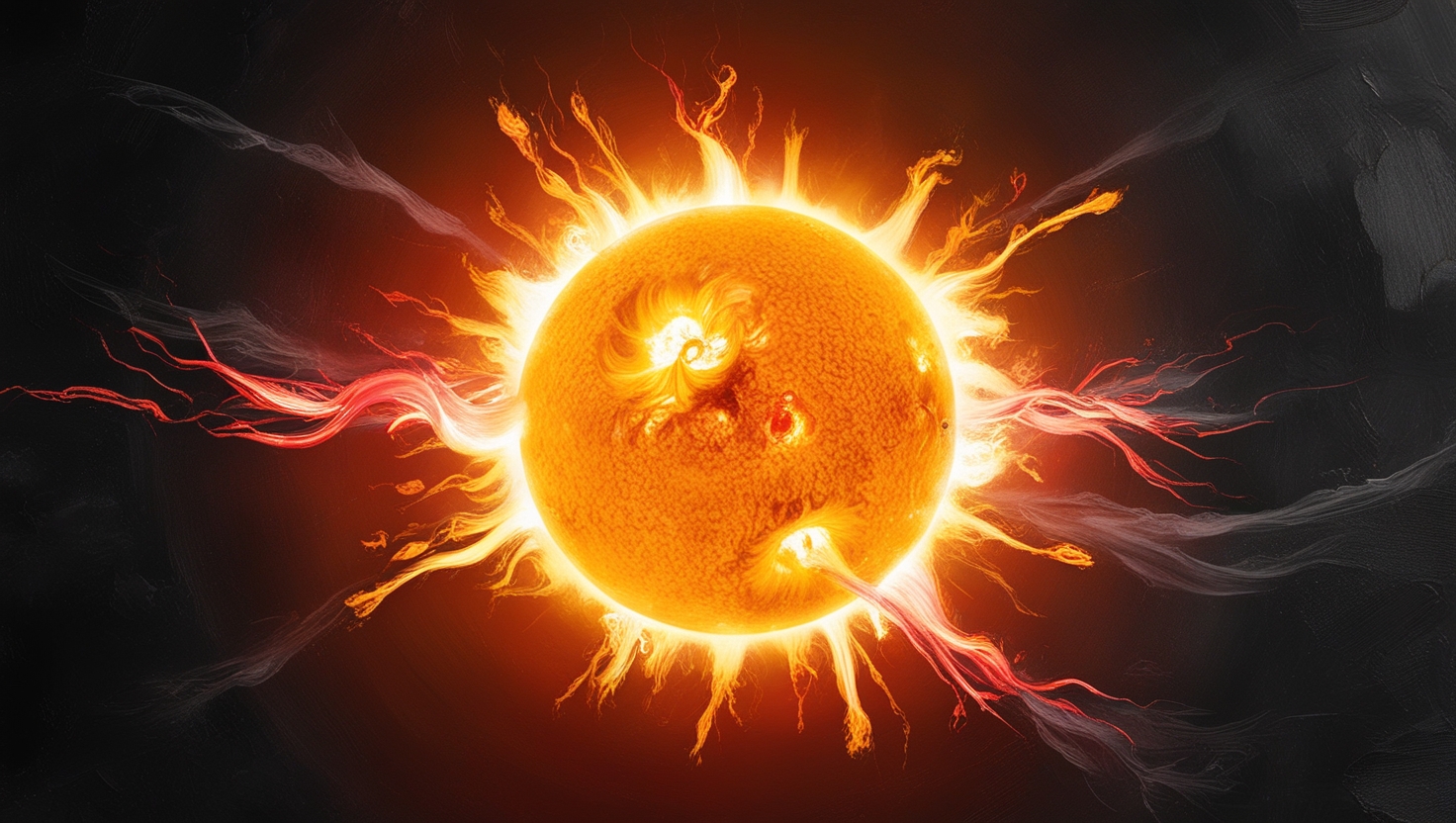
Here we summarize the main discoveries and key themes of NASA’s Parker Solar Probe mission, which reached a historic milestone by “touching” the Sun. The probe has broken speed and proximity records, providing valuable data for understanding our solar system.
Main Themes
- Historic Milestone: Parker Solar Probe made its closest approach to the Sun on December 24, 2024, coming within 3.8 million miles of the solar surface and reaching a speed of 430,000 miles per hour (that is, about 692,000 km/h), making it the fastest human-made object in history. This approach marks a historic moment for space exploration. As stated by Nicky Fox, NASA’s Science Associate Administrator , “Flying this close to the Sun is a historic moment in humanity’s first mission to a star.”
- Scientific Goals: The mission focuses on understanding the solar corona, the origin of the solar wind and the acceleration of energetic particles. The probe is collecting unprecedented data that promise to revolutionize our understanding of the Sun and its impact on the solar system. Kelly Korreck, program scientist at NASA, stated that “by gathering firsthand accounts of what happens in the solar atmosphere, Parker Solar Probe has revolutionized our understanding of the Sun.”
- Engineering and Technology: The probe was designed to withstand extreme temperatures, using a carbon-foam heat shield able to endure up to 2,600 degrees Fahrenheit (1,426 degrees Celsius) while keeping its instruments at room temperature. This represents a technological challenge of enormous scope. John Wirzburger, Parker Solar Probe mission systems engineer, stressed: “It’s monumental to be able to get a spacecraft this close to the Sun.”
- Orbit and Preparation: The probe was launched in 2018 and made seven flybys of Venus to gradually move closer to the Sun. Its orbit is designed to allow an optimal close approach every three months, balancing the need for close-up studies with protection from solar damage. Nour Rawafi, project scientist, said that “Parker Solar Probe is braving one of the most extreme environments in space and exceeding all expectations.”
- Preliminary Discoveries: Previous passes had already revealed that the outer boundary of the corona is “wrinkled” and identified the origin of the zig-zag structures in the solar wind. Adam Szabo highlighted that “we now understand the solar wind and its acceleration away from the Sun.”
- Impact on Space Exploration: The data collected not only help us understand the Sun, but can also influence space and terrestrial technologies and facilitate the search for habitable planets outside our solar system. Observations of Venus and other phenomena in the solar system have produced unexpected discoveries.
- Future Missions: The probe will continue to operate, with its next solar approaches scheduled for March 22, 2025 and June 19, 2025. Joe Westlake commented: “The data that will come down from the spacecraft will be fresh information about a place that we, as humanity, have never been.”
Key Facts
- Record Speed: 430,000 miles per hour.
- Minimum Distance from the Sun: 3.8 million miles (about 6,115,000 km)
- Heat Shield Temperature: Up to 2,600 degrees Fahrenheit (1,426 degrees Celsius), while keeping the instruments at room temperature.
- Venus Flybys: Seven, used to get closer to the Sun.
- Date of “Touching” the Sun: December 24, 2024.
- Date of First Signal: December 26, 2024, confirming the probe’s status.
Conclusions
The Parker Solar Probe mission is a milestone in space exploration and in our understanding of the Sun. With its speed and proximity records, and its collection of unique data, it is opening new frontiers for scientific and technological research. The future promises many more discoveries, thanks to the data that will be transmitted during the next phases of the mission.
Key Quotes
- “Flying this close to the Sun is a historic moment in humanity’s first mission to a star.” – Nicky Fox
- “By gathering firsthand accounts of what happens in the solar atmosphere, Parker Solar Probe has revolutionized our understanding of the Sun.” – Kelly Korreck
- “It’s monumental to be able to get a spacecraft this close to the Sun.” – John Wirzburger
- “Parker Solar Probe is braving one of the most extreme environments in space and exceeding all expectations.” – Nour Rawafi
- “We now understand the solar wind and its acceleration away from the Sun” – Adam Szabo
- “The data that will come down from the spacecraft will be fresh information about a place that we, as humanity, have never been.” – Joe Westlake
Sources: “NASA’s Parker Solar Probe: The Fastest Human-Made Object Just “Touched” the Sun and Shattered Records” – Mara Johnson-Groh, NASA’s Goddard Space Flight Center, December 28, 2024