The age of 3D printing has begun, bringing with it a revolution in the world of innovation. 3D printing is a technology that makes it possible to produce three-dimensional objects from a digital model. This technology has been a turning point in the world of manufacturing and prototyping, offering a wide range of possibilities. But what are the benefits, challenges and implications of 3D printing? In this article, we will look at how 3D printing can be used to innovate and how it can contribute to the future.
3D printing is without doubt one of the most promising technologies of the future. Thanks to its versatility, 3D printing is giving rise to innovations in fields such as construction, engineering and 3D modeling, opening the door to new advances in the production of goods and in medical applications.
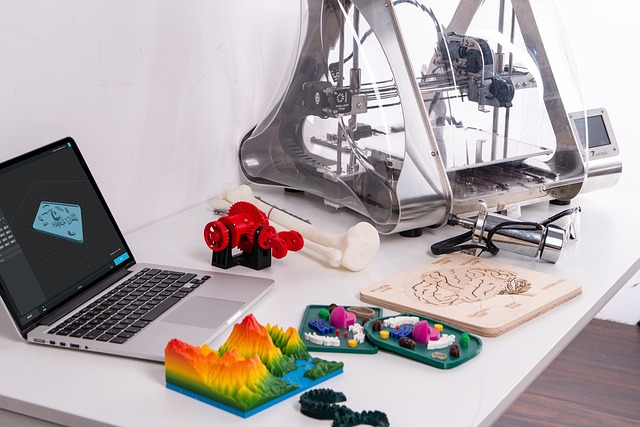
The uses of 3D printers are endless and increasingly varied. There are new products and services that can be created thanks to this technology, such as product prototypes, temporary tattoos, anatomical models and surgical instruments. Thanks to 3D printing, objects can be made more precisely and in greater detail, with the possibility of creating shapes and geometries that would be impossible to achieve with traditional methods.
But it is not just a question of precision: the technology can create objects that can be stronger and lighter than those made with traditional methods. This means that, thanks to 3D printing, new materials and new technologies can be developed, making it possible to build structures that are sturdier and safer, but also lighter and easier to handle.
The potential of 3D printing is enormous, and its impact on industries is already evident. Thanks to the ability to create prototypes more quickly and cheaply, 3D printing is already changing the way companies develop and manufacture their products. But it is not just an opportunity for companies: 3D printing can also revolutionize the world of medicine, enabling the creation of customized prostheses and surgical instruments tailored to patients.
In short, 3D printing is a technology that never stops amazing us. Its applications are constantly evolving, and its potential seems endless. Thanks to 3D printing, the future seems ever closer and brighter.
3D Printing: A Revolution in Innovation
3D printing has revolutionized the way products are designed and manufactured, bringing with it a series of advantages unimaginable just a few years ago. First of all, the opportunity for designers to experiment with new materials and new ways of making products has broadened the horizon of innovation, pushing companies to keep looking for new solutions to improve their products.
But the benefits of 3D printing don’t stop there. Adopting this technology has allowed companies to significantly reduce inspection times and production costs. Thanks to 3D printing, in fact, prototypes can be produced in a very short time, allowing development teams to test new ideas and make changes quickly and efficiently.
But perhaps one of the greatest advantages of 3D printing is the ability to produce objects with more complex shapes and sizes than traditional manufacturing methods allow. Thanks to 3D printing, it is possible to create objects with extremely intricate geometries, without any of the limits imposed by mass production. This opens new frontiers for product design, allowing designers to unleash their creativity without having to worry about the limitations imposed by traditional manufacturing processes.
In short, 3D printing represents a genuine revolution in the world of innovation, with the potential to radically transform the way we design, produce and consume products. Although it is still a relatively young technology, 3D printing is already changing the face of the manufacturing industry, opening up new possibilities and new paths for innovation.
A New Era of Possibilities
3D printing is an innovative technology that has revolutionized the world of manufacturing and design, offering new opportunities for creating and developing products. Thanks to its flexibility, 3D printing allows designers to make product prototypes more quickly and efficiently, eliminating the need for expensive equipment and traditional manufacturing processes.
In addition, 3D printing offers the possibility of creating complex, customized objects, meeting customers’ specific needs and creating unique solutions. This technology is spreading more and more across many sectors, from medicine to architecture, from the aerospace industry to the arts.
One example of how 3D printing is changing the medical world is the production of prostheses that are customized and adaptable to the needs of individual patients. 3D printing makes it possible to produce prostheses that fit the patient’s body perfectly, improving quality of life and reducing costs.
In architecture, too, 3D printing is opening up new possibilities for creating models and prototypes. Architects can create detailed, precise scale models, allowing them to visualize and modify the design more efficiently and accurately.
Moreover, 3D printing also offers advantages in terms of sustainability and waste reduction. Thanks to its flexibility and precision, this technology makes it possible to produce only the necessary quantity of a given product, avoiding wasted materials and reducing environmental impact.
In conclusion, 3D printing is a technology that offers many opportunities and advantages in different sectors, from medicine to architecture, from industry to the production of art objects. Thanks to its flexibility and affordability, 3D printing is becoming increasingly widespread and accessible, opening up new possibilities for creating and developing products all over the world.
Why It Is Important to Invest in 3D Printing
3D printing technology has come a long way in recent years and now represents a very interesting opportunity for companies. Investing in this technology can provide a major competitive advantage. 3D printing allows companies to produce prototypes quickly and efficiently, reducing product development times. This means companies can test different versions of a product in a short time, allowing them to evaluate the effectiveness of different design solutions without having to wait weeks or months to receive the finished product.
In addition, 3D printing can help companies save on production and shipping costs. When 3D printing is used to produce parts or complete products, there is no need to create expensive production tools such as molds or specialized equipment. This significantly reduces production costs, which can translate into lower prices for customers. 3D printing also reduces shipping costs, since products can be made on site, eliminating the need to transport parts or finished products from another location.
Finally, 3D printing allows companies to produce higher-quality products at lower cost. This is possible because 3D printing makes it possible to create parts and products with complex geometries that would be difficult or impossible to produce with traditional manufacturing methods. This allows companies to make products that exactly meet the specifications required by the customer, without having to compromise on quality or functionality. In addition, 3D printing makes it possible to use innovative materials, such as advanced polymers or composites, which can offer better performance than traditional materials at lower cost.
In short, 3D printing is a powerful technology that can provide many advantages to companies. Thanks to its ability to rapidly produce prototypes and parts, reduce production and shipping costs and improve product quality, 3D printing can help companies stay competitive in an increasingly demanding and constantly evolving market.
The Most Innovative Uses of 3D Printing
3D printing is revolutionizing the world of manufacturing, making it possible to create complex objects quickly and at low cost. One of the sectors where 3D printing is proving particularly useful is spare parts and prototypes. Thanks to 3D printing, companies can quickly produce spare parts and complex prototypes, eliminating the need for expensive equipment and long waiting times.
In addition, 3D printing allows customized objects to be produced quickly and efficiently. For example, the fashion industry has begun using 3D printing to produce unique designer accessories, such as earrings and bracelets. Thanks to this technology, it is possible to make objects with shapes and details that would be hard to reproduce with traditional manufacturing methods.
But 3D printing doesn’t stop there. Some companies are also experimenting with the use of 3D printing in food production. With this technology, it is possible to create foods in the most varied shapes and textures, giving rise to creative and original dishes. In addition, 3D printing could be a solution for producing food for people with special dietary needs, such as those with celiac disease or lactose intolerance.
In short, 3D printing offers endless possibilities, making it possible to create unique and complex objects quickly, efficiently and at low cost. Thanks to this technology, the world of manufacturing is experiencing a genuine revolution, opening up new prospects in various sectors, from fashion to food, from medicine to the aeronautics industry. 3D printing is only at the beginning, and the future will surely hold many more surprises for us.
How 3D Printing Can Increase Productivity
3D printing is a technology that can offer many advantages to companies that decide to use it. One of the main advantages of 3D printing is increased productivity. How? Let’s look at it together.
First of all, 3D printing allows companies to save time and money. Thanks to the ability to produce spare parts and prototypes quickly and easily, companies can avoid waiting days or weeks for the parts they need and can save on production and shipping costs. In addition, 3D printing eliminates the need to produce large quantities of parts, making it possible to produce only what is needed, avoiding waste and reducing costs.
But it is not just a question of savings. 3D printing can help companies make better-quality products and get results faster. Thanks to the precision and reproducibility of 3D printing, companies can make parts with a precision and accuracy that would be hard to achieve with other manufacturing methods. This translates into better-quality products and, as a result, a greater chance of meeting customers’ needs.
Moreover, 3D printing allows companies to produce prototypes faster and at lower cost. This means companies can test and modify their products more efficiently and quickly, getting better results in less time. This can translate into greater competitiveness on the market and greater scope for innovation.
In short, 3D printing is an innovative and advantageous solution for companies that want to increase their productivity. Thanks to the ability to produce quickly and precisely, 3D printing can help companies save time and money, make better-quality products and get results faster. If you are thinking of introducing 3D printing in your company, now is the time to learn more about this technology and discover its full potential.
The Future of 3D Printing: A Sustainable Dream
3D printing is a technology that is revolutionizing the production of objects, both in terms of design and of manufacturing itself. This technology allows designers to create new products more quickly and efficiently, thanks to the ability to make prototypes in a short time. And that’s not all: 3D printing is also an advantageous solution for companies, which can save on production costs and reduce material waste.
An important advantage of 3D printing is the ability to customize objects precisely and in detail. This means that people can use this technology to create personalized objects, from sculptures to jewelry to household utensils. And that’s not all: 3D printing can also contribute to a more sustainable future. In fact, companies can use this technology to make products with fewer materials, thereby reducing resource consumption and limiting waste.
The use of 3D printing represents a genuine revolution in the world of manufacturing. Thanks to its flexibility, this technology can be used in different sectors, from industry to medicine, from fashion to food production. This means that 3D printing has the potential to radically transform the way we produce the objects around us.
In addition, 3D printing has the potential to democratize access to the production of objects. In fact, this technology allows people to produce the objects they need directly at home, without having to buy ready-made products or have them made by third parties. This could have a significant impact on consumption, limiting resource use and reducing the environmental impact of mass production.
In conclusion, 3D printing is a technology with enormous potential. Thanks to its flexibility and its capacity for customization, this technology can be used in many different sectors, offering advantages to both companies and individuals. In addition, 3D printing can contribute to a more sustainable future, reducing resource consumption and limiting waste.
And so:
In conclusion, 3D printing is a technology with many possibilities. It can be used to produce prototypes, fashion accessories, design objects and even food. It can also help companies save on production and shipping costs. At the same time, 3D printing can contribute to the future, offering a more efficient and sustainable way to make products. 3D printing represents a revolution in innovation and can help companies make the most of new technologies.