


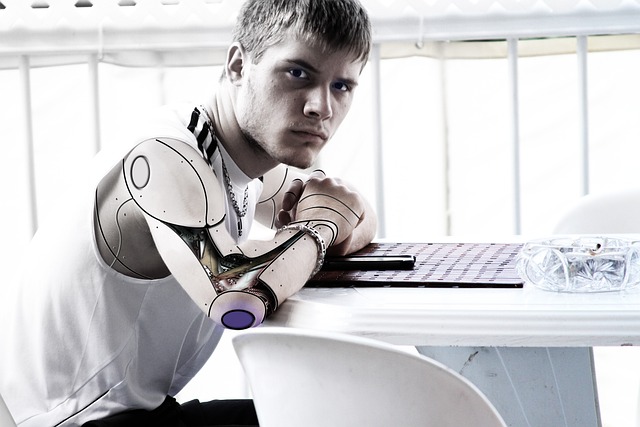
The basis for discussion
Implanting robotic add-ons on the human body is one of the most interesting and controversial technological challenges of our time. Although there are many enthusiasts of this technology, there are also many people who oppose the idea, worried about the possible negative consequences it could bring.
However, there is no doubt that this technology could offer significant benefits to many people, such as those with physical disabilities or who have undergone amputations. Thanks to robotic add-ons implanted on the human body, these people could restore some of their lost functions or significantly improve their physical abilities.
In addition, implanting robotic add-ons on the human body could also have important military, medical and public safety applications. For example, robotic add-ons could be used to improve soldiers’ precision and strength, to monitor patients with physical disabilities, or to improve emergency workers’ ability to respond to crisis situations.
However, there is also great concern about the possible negative consequences that could arise from implanting robotic add-ons on the human body. For example, many fear that these technologies could be used for military or surveillance purposes, that the biometric data collected could be misused, or that the implants could become obsolete or dangerous to health.
There are also some technical challenges that must be overcome to make implanting robotic add-ons on the human body a reality. For example, it is necessary to develop miniaturized, low-power technologies that can be easily integrated into the human body and that do not damage the surrounding cells or tissues.
Ultimately, implanting robotic add-ons on the human body is a technology with the potential to revolutionize many areas of human life, but it must be used with caution and with attention to its possible negative consequences. It is important for policymakers, researchers and privacy activists to work together to ensure that this technology is used responsibly and that it respects human rights and dignity.
Let’s talk about it a bit more
Science and technology are advancing at a frantic pace, bringing countless developments and changes to humanity’s daily life. Among the many innovations that have made their entrance onto the technological stage are robotic add-ons implanted on the human body.
But what are robotic add-ons? They are mechanical devices that can be implanted on the human body and used for a wide range of applications. Some of these robotic add-ons can be used to enhance physical abilities, such as boosting strength or agility. Others can be used to monitor and diagnose diseases or medical conditions, such as add-ons that monitor heart rate or blood sugar.
But what are the advantages of these robotic add-ons? Why should we consider the idea of implanting them in our bodies? One of the main advantages is the enhancement of our physical abilities. If a robotic add-on can increase our strength, it could enable us to do physical work we would otherwise be unable to do. Robotic add-ons could also help us improve our sports performance or carry out activities that require a high level of agility.
But robotic add-ons can also be used for medical purposes. For example, some of these add-ons can help monitor the health of our body, providing useful information to our doctor. They could also be used to treat diseases or medical conditions. For example, add-ons could be used to release drugs into our body or to stimulate our muscles to contract, in order to improve blood circulation.
Of course, there are also some disadvantages to using robotic add-ons. First, these devices can be expensive to produce and implant, putting them out of reach for many people. In addition, the use of robotic add-ons could raise some ethical and security issues. For example, they could be used to track our movements or to record sensitive information about our body, such as our blood pressure or heart rate. This could raise concerns about privacy and data security.
However, most critics of robotic add-ons focus on the possible consequences for our human identity. Implanting these devices in our body could change our essence and our perception of ourselves as human beings. It could also create social divisions between those who can afford to implant robotic add-ons and those who cannot, leading to economic and social inequalities. There are also concerns about the safety of robotic add-ons.
There have already been numerous examples of robotic add-ons implanted in human beings, although most of them are limited to mechanical prostheses. In particular, there are already leg prostheses that can be controlled by the brain, allowing people to walk and run normally. This type of prosthesis can also be used for sports such as cycling or running, allowing the wearers of these prostheses to compete with non-disabled athletes.
However, robotic add-ons are not limited to prostheses. For example, there is already a technology called the “exoskeleton”, which can be used to improve a person’s physical strength. An exoskeleton is a wearable device that covers the body and increases the wearer’s strength and agility. This type of technology can be useful for workers who have to lift heavy objects or for soldiers who have to carry heavy military backpacks.
But what would happen if these robotic add-ons became more and more advanced? If the devices became more complex and could be controlled directly by the brain? If add-ons could be used to increase the speed of information processing in the brain, improving memory and perception?
There are also some disadvantages to using robotic add-ons. For example, there is a risk that these devices could be compromised by a hacker or a computer virus. There is also a risk that the devices could break or be damaged, which could cause serious injury or even death.
In addition, there are many ethical and moral questions that must be taken into account. For example, if robotic add-ons became more and more common, there would be a risk of creating a society divided between “humanoids” and “non-humanoids”, with unpredictable consequences for social cohesion. There would also be issues concerning privacy, security and data ownership.
In conclusion, robotic add-ons represent a great challenge, not so much on the technical and health side for the add-on’s ‘wearer’, but rather from an ethical, moral, legal and social point of view.
But what will the future of this technology be? What are the ethical, social and legal implications of implanting robotic add-ons on the human body?
First, we must consider the issue of privacy. Robotic add-ons could collect data about the individual’s body, such as heart rate, body temperature, location and so on. This data could be used to improve the effectiveness of the add-on itself, but it could also be used for commercial or surveillance purposes. Moreover, this data could be vulnerable to cyberattacks, putting the individual’s security and privacy at risk.
Another issue to consider is social equality. Robotic add-ons could create a new divide between those who can afford to buy them and those who cannot. Will there be a new class of “enhanced” people who will have an advantage over others? This could lead to an even wider social gap than the one that already exists today and to a further deterioration of already precarious social equality.
There are also legal issues to consider. For example, if a robotic add-on were to cause harm to a person, who would be responsible? The owner of the add-on? The manufacturer? The doctor who performed the implant? These are important questions that must be addressed before the technology becomes widely available.
Ultimately, implanting robotic add-ons on the human body is a fascinating technology with the potential to improve the lives of many people. However, there are many ethical, social and legal issues that must be addressed before it becomes a widespread reality. We are still at a very early stage of research and development, but the future looks promising. Who knows, perhaps one day robotic add-ons will be as common as smartphones are today!